Launching a VPN reseller business is easier than ever. Many providers now offer white-label VPN solutions, branded applications, and ready-made server infrastructure. The real challenge begins when your business starts growing.
A VPN reseller panel that works well for 100 users may become difficult to manage when subscriber numbers reach thousands. More customers mean more servers, more subscriptions, more support requests, and significantly more operational complexity.
This is why VPN Reseller Panel Development should focus on scalability from the beginning. A well-designed reseller panel helps businesses automate operations, manage infrastructure efficiently, and support growth without creating administrative bottlenecks.
What Is a VPN Reseller Panel?
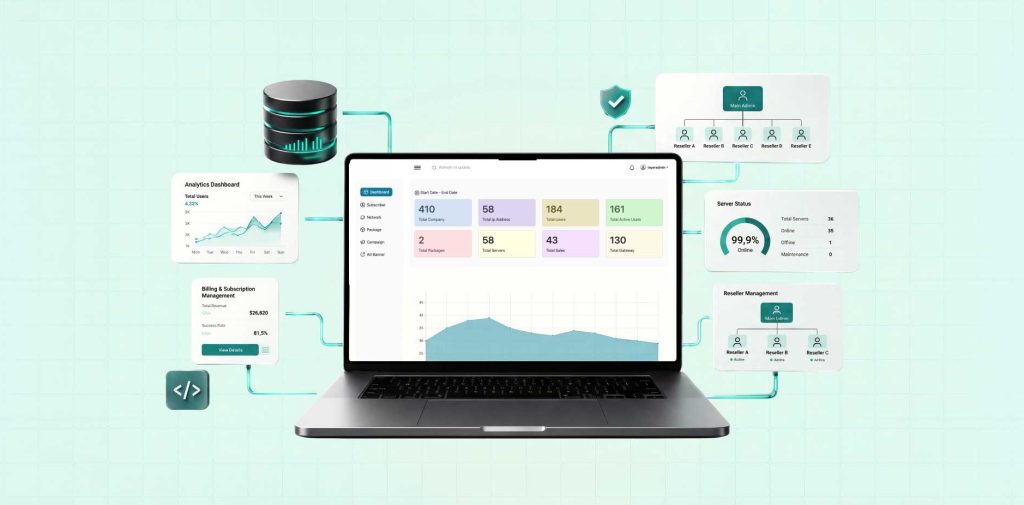
A VPN reseller panel is a centralized platform that allows businesses to manage VPN users, subscriptions, reseller accounts, billing, servers, and service access from one place.
In simple terms, it works as the control center of a VPN reseller business.
Through the panel, administrators can create user accounts, manage plans, assign access, monitor usage, control reseller activity, and track important business data. For companies offering white-label VPN services, the panel also helps manage multiple brands or resellers without building separate systems for each one.
Without a strong reseller panel, many routine tasks become manual. That may be manageable at the beginning, but it quickly becomes inefficient as the customer base grows.
Why Most VPN Reseller Panels Struggle to Scale
Many VPN reseller platforms are built around launch requirements. They help businesses start selling VPN services, but they are not always prepared for long-term operational growth.
At the early stage, manual work may not seem like a serious issue. A small team can create accounts, answer support requests, check payments, and manage servers without too much pressure.
The situation changes when the business begins to scale.
More users mean more renewals, more failed payments, more support requests, more server load, and more reseller activity. If the panel cannot automate these processes, the team spends more time managing operations instead of growing the business.
That is why scalability should not be treated as a future upgrade. It should be part of the initial development strategy.
VPN Reseller Panel vs VPN Admin Panel: What Is the Difference?
A VPN admin panel and a VPN reseller panel may appear similar on the surface, but they are designed for different operational needs.
The table below highlights the key differences:
| Feature | VPN Admin Panel | VPN Reseller Panel |
| Primary Purpose | Manage internal VPN operations | Manage multiple resellers, brands, or partners |
| User Management | Direct management of end users | Resellers manage their own customers |
| Access Control | Internal staff and administrators | Multiple reseller accounts with separate permissions |
| Reporting | Business-wide reporting | Individual reseller and brand-level reporting |
| Customer Ownership | Centralized under one VPN business | Distributed across multiple resellers or brands |
| Scalability | Suitable for a single VPN brand | Designed for multi-brand and reseller growth |
| White-Label Support | Limited or not required | Often essential for white-label VPN businesses |
A VPN reseller panel includes those capabilities but is designed to support external partners as well. It allows resellers or white-label brands to manage their own customers while still operating on the main VPN infrastructure. This can be useful for businesses that plan to expand through partners, agencies, regional distributors, or separate branded offerings.
That said, not every VPN business needs a reseller panel from day one. If you operate a single brand and do not plan to work with resellers, a standard admin panel may be enough. A reseller panel becomes more valuable when the business starts supporting multiple sellers, separate customer groups, independent reporting, or different levels of access across teams and brands.
What Starts Breaking as a VPN Business Grows
Growth exposes weaknesses that are easy to ignore during launch.
A VPN reseller business may start with a simple setup, but as more users join, small operational gaps become larger problems. These issues usually appear in four areas: user management, billing, infrastructure, and reseller control.
User Management Becomes Harder Than Expected
Managing a few hundred users is usually straightforward. The team can create accounts, update plans, reset passwords, and handle customer requests without much difficulty.
The challenge starts when the platform has thousands of active users. Customers renew subscriptions, change devices, forget credentials, request support, and expect instant access. If every small action requires manual involvement, the support team becomes overloaded.
A scalable VPN reseller business panel should make user management simple and fast. Admins and resellers should be able to create accounts, update subscriptions, control device limits, suspend access, and recover accounts without depending on technical teams for every routine request.
The goal is not only convenience. It is operational control.
Billing Becomes More Complex Alongside Revenue
VPN businesses usually depend on recurring subscriptions. That sounds simple at the beginning, but billing becomes more complicated as the business grows.
Failed renewals, refunds, discounts, trial plans, reseller commissions, payment gateway issues, and tax requirements can create a lot of administrative work. If the panel does not support billing automation, revenue management becomes messy.
A scalable VPN reseller panel should help manage billing such as subscription renewals, invoice tracking, payment status, failed payment alerts, and revenue reporting from one dashboard. For businesses working with multiple resellers, it should also make it easier to track reseller sales, commissions, and customer activity.
Infrastructure Problems Usually Appear After Growth
Many VPN businesses launch with a limited number of servers. At first, that may be enough.
As more users connect from different regions, infrastructure demand increases. Some servers may become overloaded, some locations may perform better than others, and users may begin noticing slower speeds or unstable connections.
This is where server visibility becomes important.
A strong VPN reseller panel should help administrators monitor server health, bandwidth usage, active connections, regional demand, and overall capacity. This makes it easier to identify problems before users start complaining.
At scale, infrastructure management is not only a technical issue. It directly affects customer satisfaction, retention, and brand trust.
Reseller Management Needs Better Control
If a VPN business works with multiple resellers, control becomes a major requirement.
Each reseller may have their own customers, pricing model, sales activity, and support needs. Without a proper reseller management system, the main admin team may need to handle too many small requests manually.
A scalable panel should allow resellers to manage their own customers while giving the main business full control over permissions, usage limits, reports, and access levels.
This is where multi-tenant architecture becomes valuable. It allows multiple resellers or brands to operate inside the same platform while keeping their data and activities separated.
For white-label VPN businesses, this structure is essential.
Core Features a Scalable VPN Reseller Panel Should Include
A VPN reseller panel does not need unnecessary features. It needs the right features that reduce manual work and support growth.
The most important capabilities include user management, subscription control, billing automation, reseller management, server monitoring, analytics, API integration, and role-based access.
These features should work together rather than feel like separate tools.
For example, when a customer purchases a plan, the system should be able to confirm payment, activate the account, assign VPN access, update the reseller dashboard, and record the subscription status automatically. This type of connected workflow is what makes a reseller panel scalable.
Without automation, every new customer adds more work. With automation, the business can grow without increasing operational pressure at the same rate.
Why Multi-Tenant Architecture Matters
Multi-tenant architecture is one of the most important parts of VPN reseller panel development.
Imagine managing five different VPN brands through five separate dashboards. Each brand has its own users, payments, reports, and support needs. Maintaining separate systems quickly becomes inefficient.
A multi-tenant system solves this problem by allowing multiple resellers or brands to operate within one platform while keeping their data separate.
This helps the main business manage everything centrally while giving each reseller enough independence to run their own operations. It also reduces technical maintenance, improves reporting, and makes the platform easier to expand.
For businesses planning to grow through resellers, partners, or white-label VPN brands, multi-tenancy should not be optional.
Automation Is What Makes Scaling Possible
A VPN reseller panel becomes more valuable when it reduces repetitive work.
Many daily tasks can be automated, including user onboarding, subscription activation, renewals, server assignment, payment notifications, reseller reporting, and account suspension.
This matters because manual operations create delays. Delays affect customer experience. Poor customer experience affects retention.
Automation allows the business to serve more users without constantly increasing support and admin workload. It also reduces human error, improves response time, and helps teams focus on growth instead of routine maintenance.
Analytics Help Businesses Make Better Decisions
A reseller panel should not only manage operations. It should also show what is happening inside the business.
Basic reporting is not enough for a growing VPN company. Decision makers need to understand user growth, active subscriptions, revenue trends, churn, server usage, reseller performance, and regional demand.
These insights help businesses answer important questions.
Which plans are performing best? Which resellers are bringing the most customers? Which server locations need more capacity? Where are users dropping off?
Without analytics, businesses often make decisions based on assumptions. A good reseller panel turns operational data into useful business direction.
Security Cannot Be Treated as a Side Feature
A VPN reseller platform handles sensitive operational data. It may include user accounts, subscription details, reseller access, payment status, server information, and API connections.
Security must be built into the system from the beginning.
Important security controls include multi-factor authentication, role-based access, encrypted communication, secure credential handling, audit logs, API protection, and permission control for resellers and internal teams.
The panel should also support modern VPN protocols and secure infrastructure practices. For a VPN business, weak backend security can damage customer trust even if the app itself looks professional.
Signs Your VPN Reseller Panel Is Limiting Growth
A business may not immediately realize that its reseller panel is holding it back.
The signs usually appear gradually.
You may have outgrown your current panel if:
- New users still require manual activation
- Subscription issues create frequent support tickets
- Resellers depend on admins for basic actions
- Server capacity is difficult to monitor
- Billing reports require manual work
- Customer data is scattered across multiple tools
These problems may seem small at first. Over time, they slow down growth and increase operational costs.
A scalable reseller panel should make growth easier, not more complicated.
Common Mistakes Businesses Make
- Building only for launch instead of planning for future growth. Many businesses focus on getting the VPN brand live quickly but do not think enough about what happens after the first stage of growth.
- Delaying automation. Manual processes may save development time in the beginning, but they often create bigger operational challenges later.
- Underestimating billing complexity, ignoring server monitoring, or creating reseller access without proper permission controls. These gaps can become expensive and difficult to fix once the platform is active.
- Failing to design the reseller panel around long-term operations from the start. A scalable approach helps avoid costly adjustments as the business grows.
Building a VPN Reseller Platform for Long-Term Growth
A strong VPN reseller panel should match the business model, not just the technical requirements.
Some businesses need a simple reseller dashboard. Others need a full white-label VPN management system with billing, analytics, infrastructure control, API access, and multi-brand support.
This is why custom development is often important for businesses with serious growth plans. A ready-made panel may help with launch, but a custom-built platform can support specific workflows, preferred payment systems, regional business needs, reseller structures, and future integrations.
For B2B VPN businesses, the panel should be treated as a long-term operational asset. It should support how the business sells, manages, scales, and serves customers.
Future of VPN Reseller Panel Development
VPN reseller platforms are moving beyond basic account management.
More businesses now expect automation, better reporting, self-service reseller onboarding, API-first architecture, smarter infrastructure monitoring, and stronger security controls.
As competition grows, the companies that manage operations better will have an advantage. Users may see the VPN app on the front end, but the quality of the backend system often decides how reliably the business can serve them.
A scalable reseller panel helps businesses stay prepared for that growth.
FAQ
What is a VPN reseller panel?
A VPN reseller panel is a management dashboard that allows businesses to manage users, subscriptions, servers, billing, and reseller operations from a centralized platform.
How does a VPN reseller panel work?
It connects user management, billing systems, VPN infrastructure, and automation tools into a single operational dashboard.
What features should a VPN reseller panel include?
User management, subscription management, billing automation, server monitoring, analytics, API integrations, and multi-tenant support.
Why is multi-tenant architecture important?
It allows multiple resellers to operate independently while sharing a common infrastructure, improving scalability and reducing costs.
Can a VPN reseller panel automate billing?
Yes. Modern reseller platforms typically integrate with payment gateways to automate invoicing, renewals, and payment tracking.
How much does VPN reseller panel development cost?
Costs vary depending on features, integrations, infrastructure requirements, security controls, and customization needs.
Final Thoughts
By now you may get that VPN reseller panel development is all about creating the operational foundation for a VPN business that can grow without becoming harder to manage at every stage. As users, subscriptions, resellers, and servers increase, the panel becomes one of the most important systems behind the business.
Contact us to get the best VPN reseller panels built around automation, multi-tenant architecture, billing control, infrastructure visibility, analytics, and secure access management.
For businesses planning to launch or expand a white-label VPN service, scalability should not be treated as something to fix later. It should be part of the development plan from the beginning.